Meta-Analysis: Hydroxyapatite's Caries-Preventive Evidence (2025)
Introduction
Dental caries remains a global challenge, but fluoride-free options are increasingly viable thanks to biomimetic agents like hydroxyapatite (HAP) — especially nano-hydroxyapatite (nHA, 20–100 nm particles) that mimic natural enamel for micropore repair and remineralization.
A key 2024/2025 updated systematic review and meta-analysis (published Dec 2024 in Journal of Dentistry) pools the latest RCTs, in vivo, and in situ evidence showing HAP in oral care products reduces caries risk effectively — often outperforming placebo and trending non-inferior to fluoride.
This is not a substitute for professional dental care — always consult your dentist for personalized advice.
Key 2025 Meta-Analysis Findings (Pawinska et al.)
Just searched PubMed/PMC (March 2025): The updated review by Pawinska M. et al. (Journal of Dentistry, 2024 Dec;151:105429) builds on prior work, incorporating more recent clinical trials.
- Main Results (Clinical Trials Meta-Analysis):HAP toothpastes significantly better than placebo for caries prevention — pooled Odds Ratio (OR) = 2.51 (favoring HAP).Vs. fluoride toothpastes: pooled OR = 1.1 (favoring HAP slightly, but non-significant — indicating non-inferiority trends).
- In Situ Studies:Significant reductions in lesion depth (overall mean change 1.15 µm) and bacterial loads (overall mean reduction 65%).Remineralization showed non-significant but favoring trends for HAP (overall mean change 2.8%).
- Conclusions from Authors:More studies now confirm HAP as an effective anti-caries ingredient without fluoride. It serves as a safe alternative, especially for those avoiding fluoride (e.g., kids at ingestion risk or fluoride-sensitive individuals).
Citation: Pawinska M, Paszynska E, Amaechi BT, et al. Clinical evidence of caries prevention by hydroxyapatite: An updated systematic review and meta-analysis. Journal of Dentistry. 2024;151:105429. doi:10.1016/j.jdent.2024.105429. (Open access available.)
Balanced View: Fluoride remains gold-standard for broad caries prevention via fluorapatite formation and strong antibacterial effects. HAP excels in biomimetic direct repair (filling enamel micropores), no fluorosis risk, and microbiome-friendly profiles. Long-term head-to-head data still evolving — no agent is universally "superior," but HAP shows strong fluoride-free viability.
Comparison Table
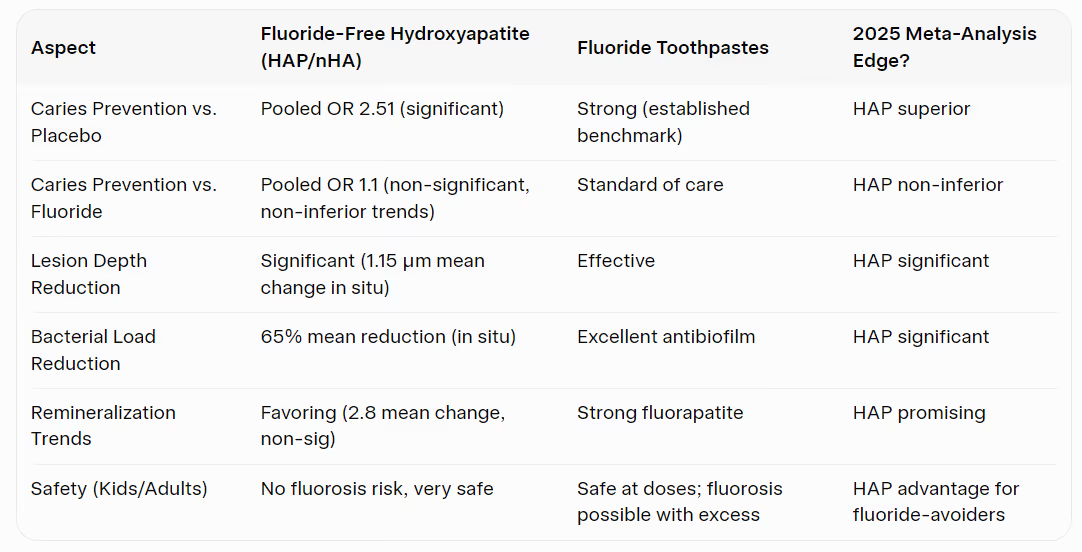
AspectFluoride-Free Hydroxyapatite (HAP/nHA)Fluoride Toothpastes2025 Meta-Analysis Edge?Caries Prevention vs. PlaceboPooled OR 2.51 (significant)Strong (established benchmark)HAP superiorCaries Prevention vs. FluoridePooled OR 1.1 (non-significant, non-inferior trends)Standard of careHAP non-inferiorLesion Depth ReductionSignificant (1.15 µm mean change in situ)EffectiveHAP significantBacterial Load Reduction65% mean reduction (in situ)Excellent antibiofilmHAP significantRemineralization TrendsFavoring (2.8 mean change, non-sig)Strong fluorapatiteHAP promisingSafety (Kids/Adults)No fluorosis risk, very safeSafe at doses; fluorosis possible with excessHAP advantage for fluoride-avoiders
Practical Takeaways for Fluoride-Free Oral Care
- Choose 10–15% nHA toothpastes (e.g., Boka Ela Mint, Risewell — affiliate links below) for daily prevention.
- Brush 2x daily; pair with good hygiene/diet for best remineralization.
- Ideal for early lesions, sensitivity, or pediatric use.
Affiliate Disclosure: This post contains affiliate links to products we believe in. We may earn a commission on qualifying purchases — at no extra cost to you. All opinions evidence-based.
Conclusion
This 2025-updated meta-analysis solidifies fluoride-free hydroxyapatite as a clinically supported caries-preventive agent: significantly better than placebo and non-inferior (with positive trends) to fluoride in key metrics. For those seeking safe, biomimetic remineralization without fluoride, nHA offers compelling evidence-backed potential.
This is not a substitute for professional dental care — discuss with your dentist.
READ FULL STUDY →