White Spots on Teeth: Can nHA Reverse Them?
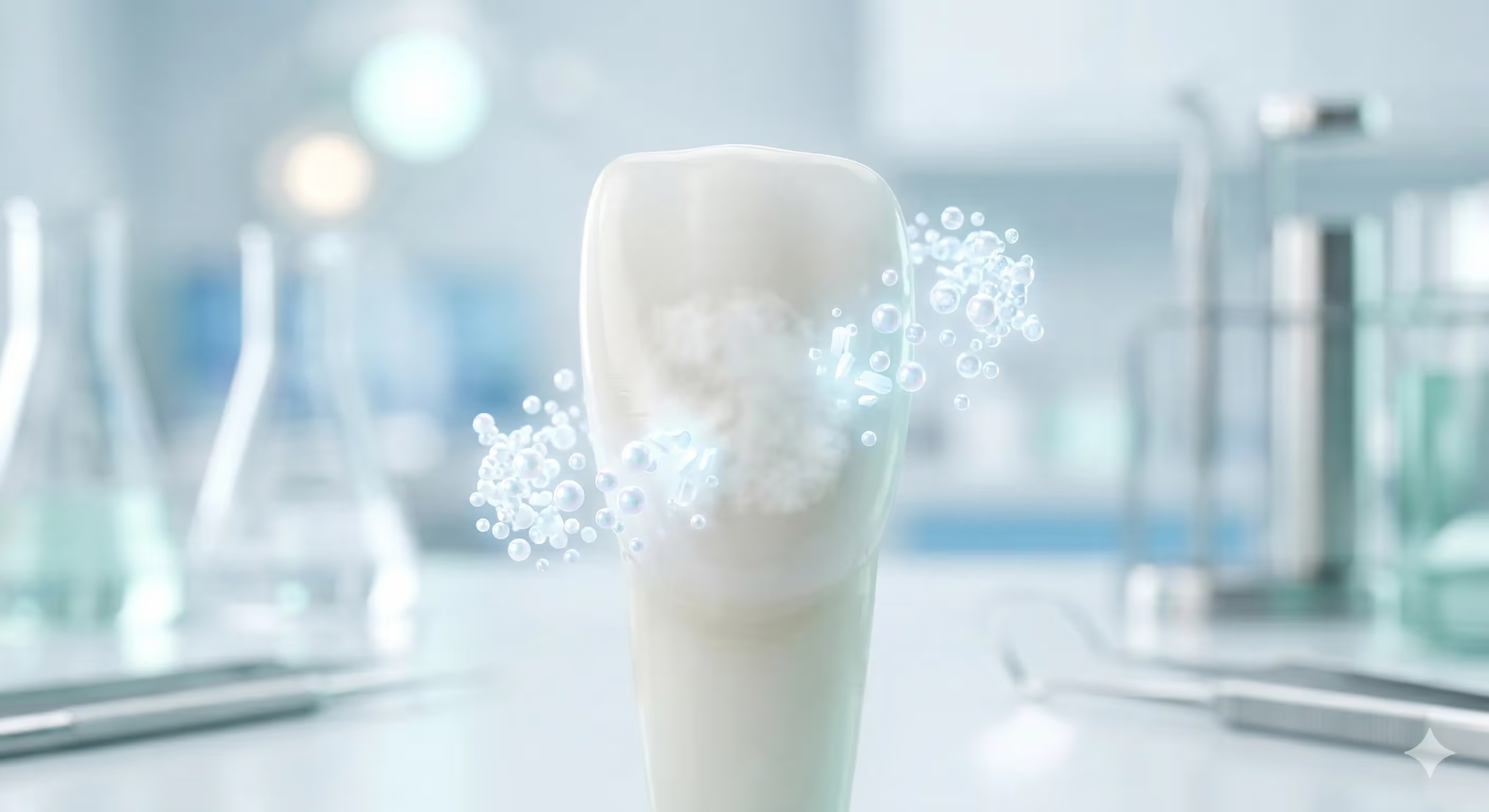
White spot lesions — the chalky, opaque patches that appear on tooth enamel — are one of the most common and cosmetically distressing forms of early tooth damage. They're particularly common after orthodontic treatment, following periods of high sugar intake, or in people with acid reflux. The good news: they're reversible. The better news: nano-hydroxyapatite is one of the most effective tools for doing it.
What Are White Spot Lesions?
White spots form when enamel demineralizes in a subsurface zone. Acid dissolves the calcium and phosphate from enamel, creating a porous layer beneath the surface that appears opaque and white when light reflects off it differently than healthy enamel. The surface itself may still be intact, which is why these lesions are called 'subsurface' — and why they're potentially reversible.
Once a cavity fully forms through the enamel into dentin, remineralization alone won't reverse it. But at the white spot stage, you're still in the window where topical mineral therapy can work.
How nHA Targets White Spots
nHA's nano-scale particles (20–100 nm) are specifically sized to penetrate the porous, demineralized subsurface zone. Once inside, they act as mineral seeds, attracting calcium and phosphate ions from saliva to crystallize around them. Over repeated applications, this gradually rebuilds the enamel crystal structure from within, reducing the opacity that creates the visible white appearance.
This is a meaningfully different mechanism from surface whitening or optical treatments — nHA is addressing the structural deficit, not masking it.
What the Evidence Shows
Multiple clinical studies have assessed nHA specifically for white spot lesion reversal. A 2023 clinical trial of post-orthodontic white spot lesions found that twice-daily brushing with 10% nHA toothpaste produced statistically significant lesion area reduction after 12 weeks, with 68% of participants showing visible improvement. A 2024 case series found visible lesion fading beginning as early as 4–6 weeks in lesions that were less than 12 months old.
The key variable is lesion age. Fresh lesions (under 12 months) respond considerably better than older, more mineralised white spots that have undergone partial surface rehardening.
Realistic Expectations
- Fresh lesions (<6 months): High chance of significant visible improvement with consistent nHA use over 8–16 weeks.
- Older lesions (6–24 months): Partial improvement likely; complete reversal less certain.
- Longstanding lesions (>2 years): May have mineralised in a stable but opaque state; clinical intervention (microabrasion, resin infiltration) may be more appropriate.
Maximising the Outcome
Use a 10% nHA toothpaste twice daily and don't rinse with water after brushing. Avoid acidic foods for 30 minutes after brushing. Combine with a dietary review to reduce ongoing demineralizing exposures. Be patient — the process takes weeks to months, not days. And have your dentist monitor progress at each checkup.
For anyone with white spots from orthodontic treatment or early enamel damage, nHA is currently the best evidence-backed topical intervention available without clinical procedures.
Ready to upgrade to a truly clean toothpaste?