nHA Rinse vs Fluoride Rinse: Which Should You Use?
The mouthwash aisle has never been more confusing. Alongside the long-established fluoride rinses, nHA-based options are now appearing on shelves and online. Both claim to protect and repair enamel — but they work in fundamentally different ways. Here's a clear-eyed comparison to help you decide.
How They Work
Fluoride rinse: Fluoride ions in the rinse penetrate slightly demineralized enamel and form fluorapatite, a mineral that is marginally harder and significantly more acid-resistant than natural hydroxyapatite. At typical OTC concentrations (225–500 ppm), fluoride rinses provide meaningful remineralization support and have a mild antibacterial effect.
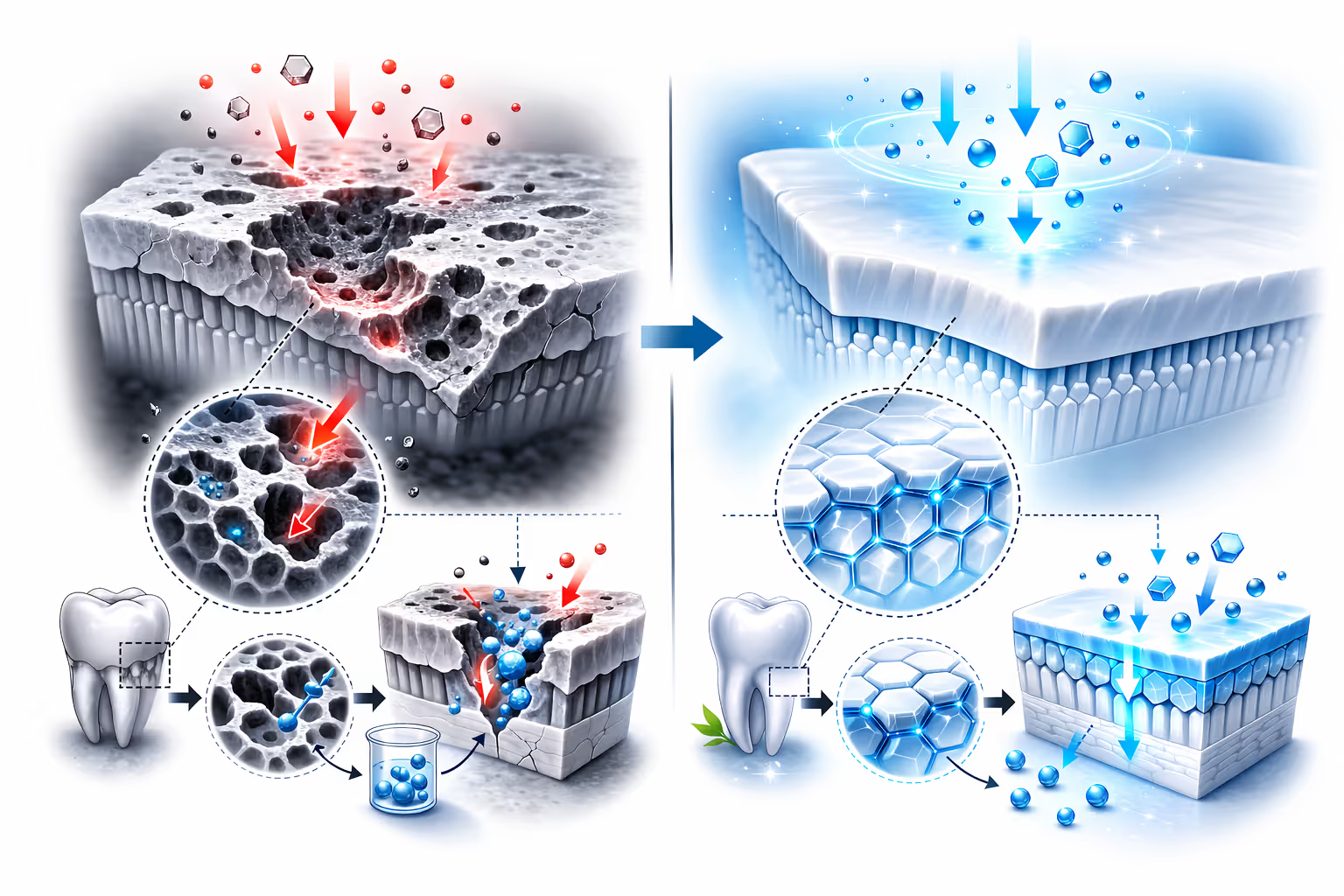
nHA rinse: Nano-hydroxyapatite particles physically deposit into enamel pores and dentinal tubules during rinsing contact. Rather than altering enamel's chemical composition, they replenish it with the same mineral it's already made of. No antibacterial effect, but the biomimetic repair mechanism is structurally different — and complementary to fluoride's approach.
Evidence Comparison
Fluoride rinses have a 50-year evidence base and are supported by dozens of clinical trials demonstrating caries reduction. This is strong, established science.
nHA rinses have a smaller but growing evidence base. Studies consistently show remineralization efficacy comparable to fluoride rinses for early lesion arrest and sensitivity reduction. The research is newer but methodologically sound, and the EU SCCS has approved nHA for oral care use at up to 10% concentration.
Safety
Fluoride rinses carry a small risk of fluorosis in children who ingest them, and should be used with supervision under age 6. For adults, they are safe at OTC concentrations.
nHA rinses are considered safe for all ages, including children and pregnant women. They are non-toxic when swallowed in normal amounts — making them the more straightforward choice for families.
Who Should Use Which
- Fluoride rinse: Adults at moderate–high cavity risk, those without fluoridated water, anyone looking for the most evidence-dense remineralization support alongside nHA toothpaste.
- nHA rinse: Anyone avoiding fluoride, children and families, people with fluoride sensitivity, or those wanting a biomimetic approach throughout their full routine.
- Both (alternating): A practical approach for adults who want comprehensive protection — use nHA rinse in the morning and fluoride rinse at night, or alternate days.
The Bottom Line
There's no universal winner. Fluoride rinses offer proven antibacterial and remineralization benefits backed by decades of data. nHA rinses offer a safer profile, biomimetic repair, and no fluorosis risk. The right choice depends on your risk profile, your age, and whether you're already using fluoride toothpaste. Many people will find that using both — strategically — gives the most comprehensive protection.
Ready to upgrade to a truly clean toothpaste?