Is Fluoride-Free Safe for My Child? A Parent's Guide
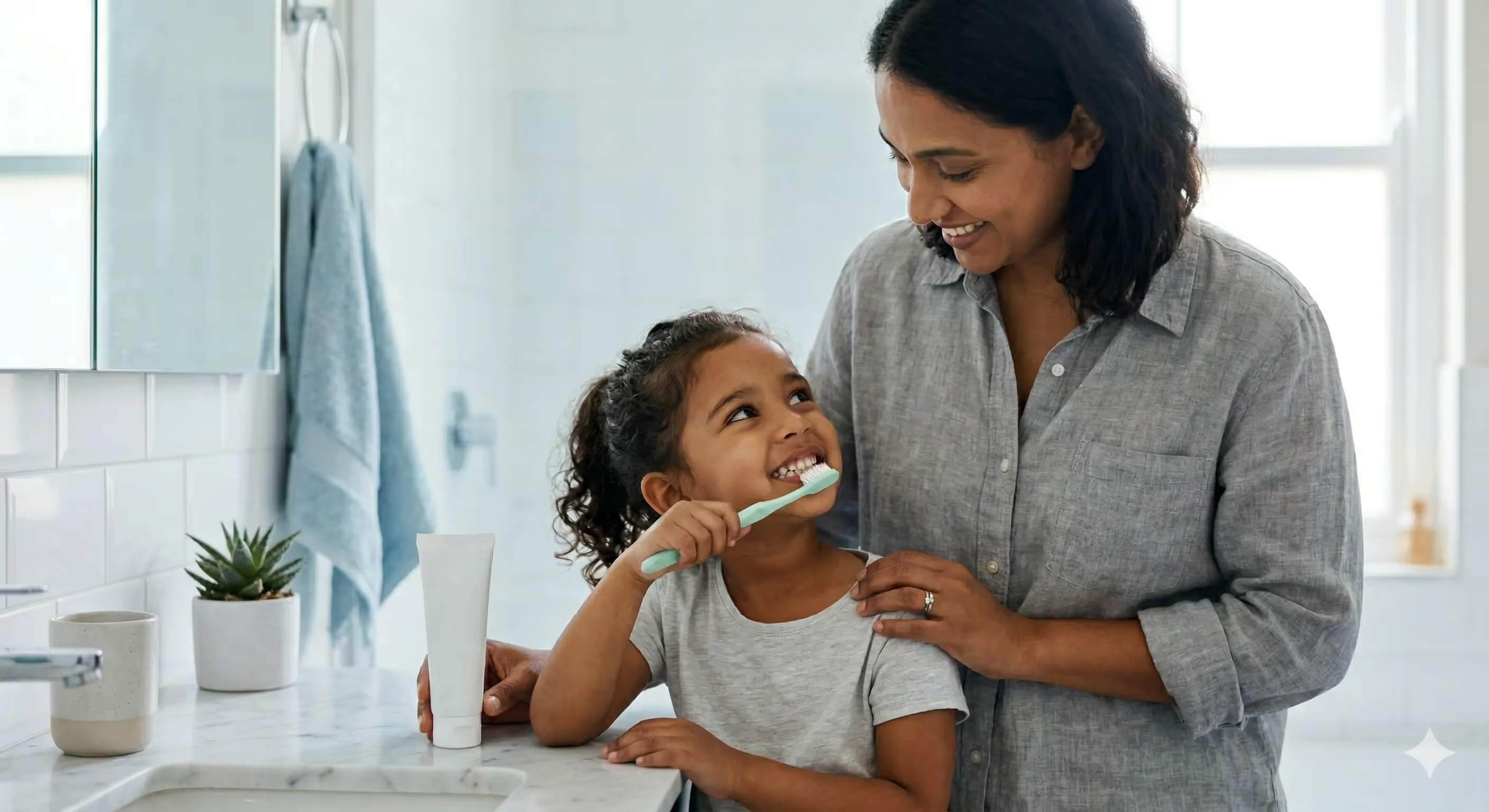
Few topics generate more parental anxiety than fluoride in children's toothpaste. On one side: decades of public health endorsement. On the other: genuine concerns about fluorosis and the appeal of cleaner formulations. Here's an honest, evidence-based guide to help you navigate the decision.
Why Parents Are Concerned About Fluoride
Dental fluorosis — caused by excess fluoride ingestion during enamel development — is a real phenomenon. In its mild form, it presents as white spots or streaks on permanent teeth. In moderate forms, it can cause more significant discolouration. It occurs when children regularly swallow fluoride-containing products during the years their permanent teeth are forming (approximately ages 1–8).
Current guidance recommends rice-grain amounts for under-3s and pea-sized amounts for 3–6 year olds precisely because ingestion is common in this age group. But many parents prefer to remove the concern entirely by choosing a non-fluoride formulation.
What the Evidence Says About nHA for Children
The evidence for nHA as a fluoride alternative in children is positive and growing. A 2021 randomized controlled trial in children aged 6–12 found that 10% nHA toothpaste produced equivalent caries reduction to 1,000 ppm fluoride over a 12-month period. The EU SCCS has approved nHA for use in children's oral care products with no age restriction.
Critically, nHA is non-toxic when swallowed. There is no equivalent of fluorosis — hydroxyapatite is simply reabsorbed as the same mineral the body already produces. This makes nHA particularly appropriate for children under 6 who regularly ingest toothpaste.
When Fluoride Might Still Be Recommended
For children at elevated cavity risk — those with a high sugar diet, impaired saliva production, previous caries history, or living in areas without fluoridated water — some dentists will still recommend fluoride toothpaste, potentially in combination with nHA. This is a conversation worth having with your child's dentist based on their specific situation.
Making the Switch: Practical Steps
- Switch to a 5–10% nHA toothpaste formulated for children (Boka Kids, RiseWell Kids, Davids Kids are all well-regarded).
- Maintain twice-daily brushing with a pea-sized amount.
- Encourage spitting — but don't stress about it for under-6s.
- Continue regular dental checkups — your dentist can monitor enamel health and flag any concerns early.
- If your child's cavity risk is high, discuss the decision with your dentist before switching fully.
For most healthy children with a reasonable diet and good brushing habits, nHA provides clinically sound cavity protection without any of the fluorosis risk. The decision is ultimately yours to make — but it can be made with confidence in the evidence.
Ready to upgrade to a truly clean toothpaste?