Can nHA Prevent Cavities? What the Research Says
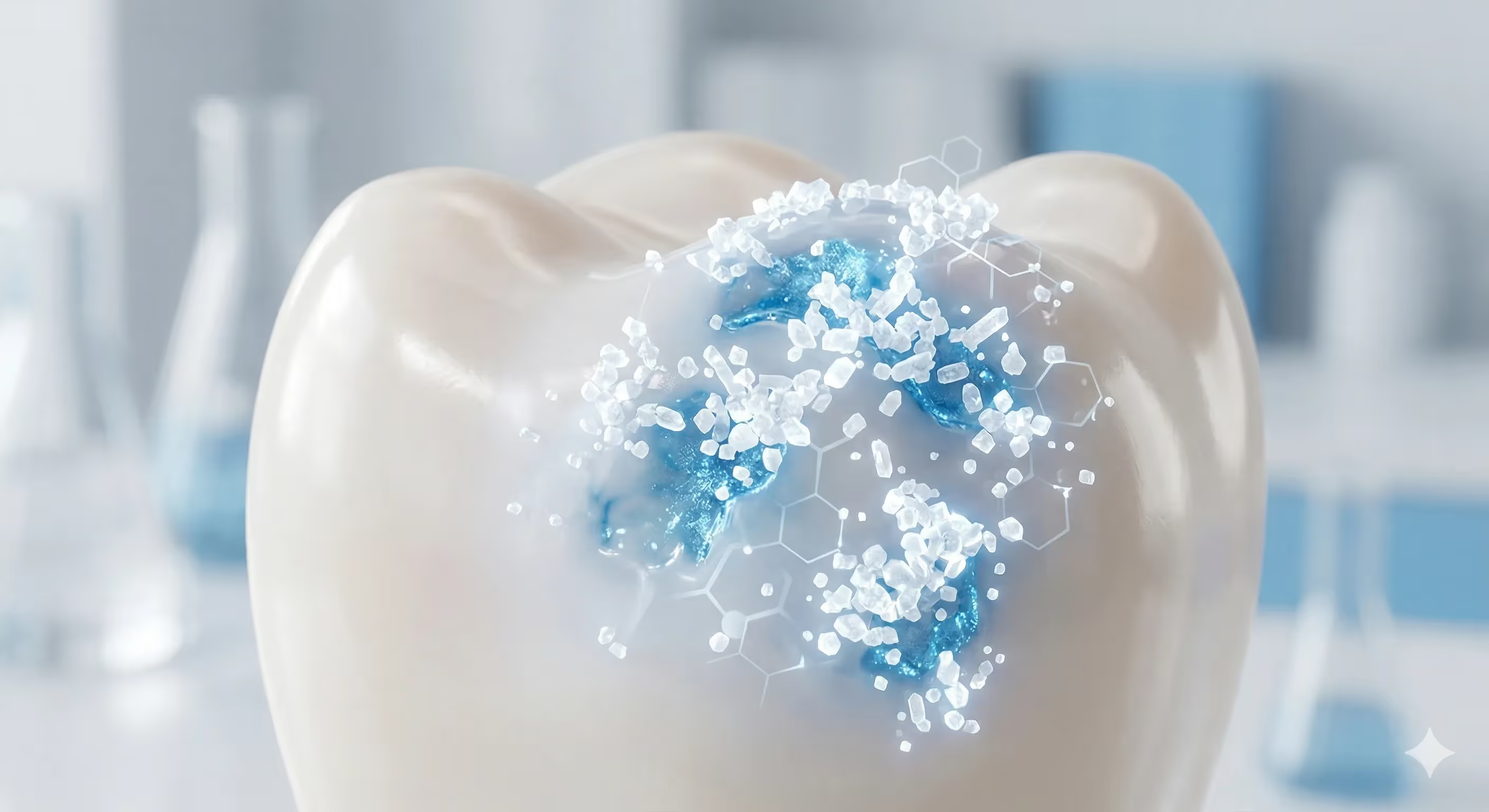
Nano-hydroxyapatite is frequently discussed in the context of remineralization and sensitivity — but what about cavity prevention, the foundational promise of any toothpaste? Here's what the clinical evidence actually shows about nHA's caries-preventive efficacy.
How Cavities Form
Caries (tooth decay) begins when acid-producing bacteria in dental plaque metabolize sugars, creating acids that drop the oral pH below 5.5. At this point, calcium and phosphate dissolve from enamel — demineralization begins. If this process occurs more frequently than saliva-mediated remineralization can reverse it, the lesion progresses from early white spot to frank cavitation through the enamel and into dentin.
Cavity prevention therefore requires either reducing the acid challenge (through antibacterial interventions and dietary change), enhancing remineralization (to outpace the damage), or both.
nHA's Mechanism for Caries Prevention
nHA addresses caries primarily through the remineralization pathway. By depositing mineral into enamel pores during brushing, it helps maintain enamel integrity and reduces the depth and progression of early lesions. It does not have a meaningful antibacterial effect — unlike fluoride, which inhibits certain bacterial enzymes, or xylitol, which disrupts bacterial metabolism.
This means nHA's caries-preventive mechanism is 'defensive repair' rather than 'active suppression' of the bacterial cause.
What Clinical Trials Show
A 2022 meta-analysis of seven randomized controlled trials found that nHA toothpaste showed comparable caries increment reduction to fluoride toothpaste in low-to-moderate risk populations over 12–24 month study periods. The effect size was equivalent at standard concentrations (5–10% nHA vs. 1,000–1,450 ppm fluoride).
Importantly, in high-risk caries populations — such as patients with dry mouth, those undergoing radiation therapy, or those with very high sugar consumption — prescription fluoride (5,000 ppm) still demonstrated significantly better outcomes. nHA does not match high-dose prescription fluoride for extreme-risk cases.
The Honest Limitations
- nHA does not kill cavity-causing bacteria. If your cavity risk is driven primarily by a high bacterial load, nHA alone may not be sufficient.
- nHA's caries prevention data comes largely from studies shorter than two years. Longer-term comparative data is still accumulating.
- At very high caries risk, clinical fluoride interventions (varnish, prescription toothpaste) remain the standard of care.
The Bottom Line
For the majority of people with normal-to-moderate cavity risk, nHA toothpaste provides clinically comparable caries protection to standard fluoride toothpaste. It's a well-evidenced choice for daily prevention. For high-risk patients, the most evidence-based approach is to use nHA as a complement to, rather than a replacement for, professional fluoride applications.
Ready to upgrade to a truly clean toothpaste?